
Tired of digging through folders every time you open File Explorer? Good news — you can pin any folder to Quick Access in seconds.
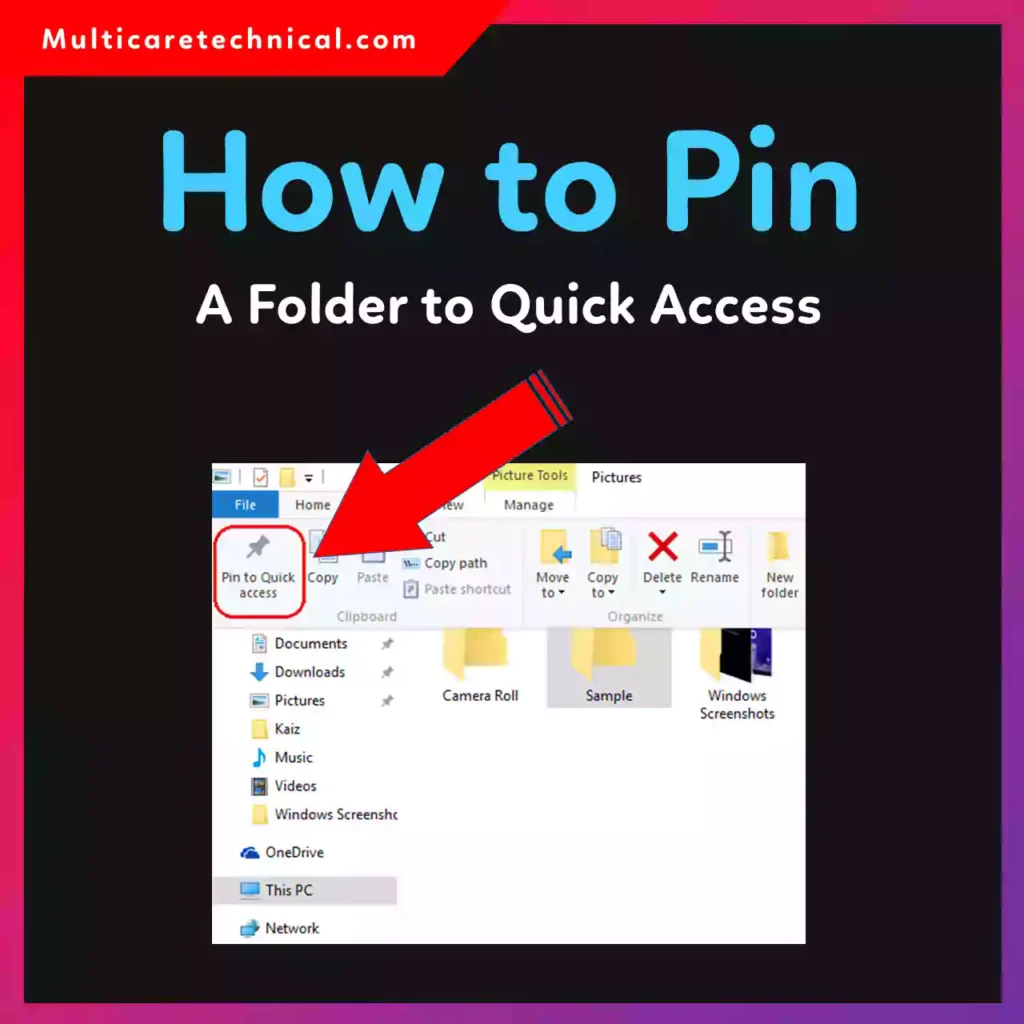
Whether you’re using Windows 10 or Windows 11, this guide will show you the fastest way to pin folders — including OneDrive, SharePoint, Teams, and more.
Let’s make your workflow faster today.
📌 Quick Answer (Featured Snippet Style)
How to pin a folder to Quick Access in File Explorer?
Open File Explorer → Right-click the folder → Click “Pin to Quick Access.” The folder will instantly appear in the left sidebar.
🖥️ Method 1: How to Pin a Folder to Quick Access in File Explorer
This works in both Windows 10 and 11.
Steps:
- Open File Explorer
- Locate the folder you want
- Right-click the folder
- Select Pin to Quick Access
That’s it.
This is the most common method for users searching:
how to pin a folder to quick access in file explorer
📂 Method 2: Drag and Drop to Quick Access
You can also:
- Open File Explorer
- Drag your folder to the left panel
- Drop it under Quick Access
It pins instantly.
☁️ How to Pin a Folder to Quick Access in OneDrive
If you use Microsoft OneDrive:
- Open your OneDrive folder in File Explorer
- Right-click any folder
- Click Pin to Quick Access
This works for synced cloud folders.
👉 Perfect if you’re searching:
how to pin a folder to quick access in onedrive
🌐 How to Pin a Folder to Quick Access from SharePoint
Using Microsoft SharePoint?
First, make sure the SharePoint folder is synced to your computer via OneDrive.
Steps:
- Open SharePoint in browser
- Click Sync
- Wait for it to appear in File Explorer
- Right-click → Pin to Quick Access
This answers:
how to pin a folder to quick access from sharepoint
📧 How to Pin a Folder to Quick Access in Outlook
If you mean email folders inside Microsoft Outlook:
You can’t pin Outlook folders directly to Windows Quick Access. However, you can:
- Add folders to Favorites inside Outlook
- Or create a desktop shortcut and pin that
This covers:
how to pin a folder to quick access in outlook
💬 How to Pin a Folder to Quick Access in Teams
For files inside Microsoft Teams:
- Open Teams
- Go to Files tab
- Click Open in SharePoint
- Sync the folder
- Pin it from File Explorer
This solves:
how to pin a folder to quick access in teams
🍏 What About Mac Users?
If you’re wondering how to pin a folder to quick access Mac, here’s the equivalent:
On macOS:
- Open Finder
- Drag the folder into the Favorites section in the sidebar
Mac doesn’t use “Quick Access,” but Favorites works the same way.
⚠️ Common Issues & Fixes
- Option missing? Restart File Explorer.
- Folder won’t pin? Make sure it’s a local or synced folder.
- Accidentally unpinned? Just repeat the steps.
🚀 Why Use Quick Access?
- Saves time
- Reduces clicks
- Keeps important folders visible
- Boosts productivity
If you manage lots of documents daily, this small trick makes a big difference.
🔗 Helpful Tech Guides
You may also like:
- How to access hidden apps on iPhone:
https://multicaretechnical.com/how-to-access-hidden-apps-on-iphone-11-to-16-complete-2026-guide - How to access emojis on Chromebook 😊:
https://multicaretechnical.com/how-to-access-emojis-on-chromebook-%f0%9f%98%8a-quick-easy-2026-guide - How to access screenshots on Mac:
https://multicaretechnical.com/how-to-access-screenshots-on-mac-macbook-air-pro-2026-guide
❓ FAQ (Optimized for AI Overviews)
1. How to pin a folder to Quick Access in File Explorer?
Right-click the folder and select “Pin to Quick Access.”
2. How to pin a folder to Quick Access in OneDrive?
Open OneDrive in File Explorer, right-click the folder, and pin it.
3. How to pin a folder to Quick Access from SharePoint?
Sync the folder using OneDrive first, then pin it in File Explorer.
4. Can I pin Outlook folders to Quick Access?
Not directly. Use Outlook Favorites instead.
5. How to pin a folder to Quick Access on Mac?
Drag the folder into the Finder sidebar under Favorites.
🏁 Conclusion
Now you know how to pin a folder to Quick Access in Windows 10 and 11 — plus how to handle OneDrive, SharePoint, Teams, Outlook, and even Mac alternatives.
It takes just seconds — but saves you time every day.
Make your File Explorer work smarter, not harder.